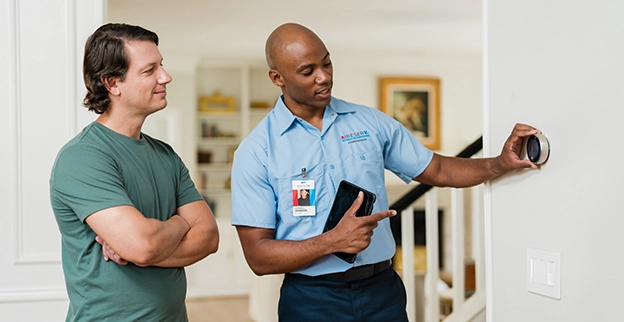
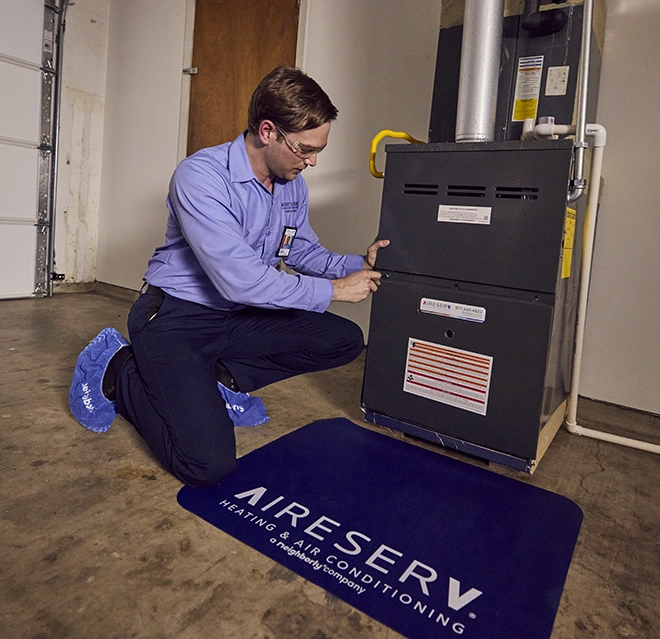
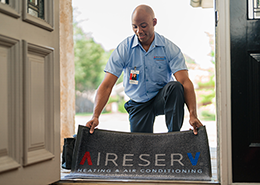
A furnace replacement begins with an evaluation of your home's square footage, insulation, ductwork, and fuel source, followed by a Manual J heat load calculation that determines the BTU capacity your home requires. Ceiling height, window area, and West Michigan's climate all feed that number. You then choose from gas, electric, or oil equipment, including high-efficiency models, with a by-the-job price for each option. On installation day, the old furnace is removed, the new unit is set and connected, and gas, electrical, venting, and condensate connections are completed to manufacturer specification. Ductwork transitions are adapted where the new cabinet differs from the old one. All connections are tested, a full startup check is performed, and combustion, temperature rise, and airflow are verified against specification. Before we leave, your service professional walks you through basic operation, thermostat settings, and the filter schedule that keeps the warranty intact.