Skip to Main Content Skip to Footer Content

Heat Pump Installation and Replacement in Northwest Florida

A heat pump is an air conditioner that runs in reverse—moving heat out in summer and bringing it inside on cooler nights. It’s a smart fit for Northwest Florida’s mild winters, where efficient heat transfer can outperform traditional heaters.

A heat pump can add heating capability without the cost of separate systems. Learn what to look for, how coastal conditions affect performance, and whether a heat pump is right for your home.

Call or schedule online.

Heat Pump Installation and Replacement in Northwest Florida
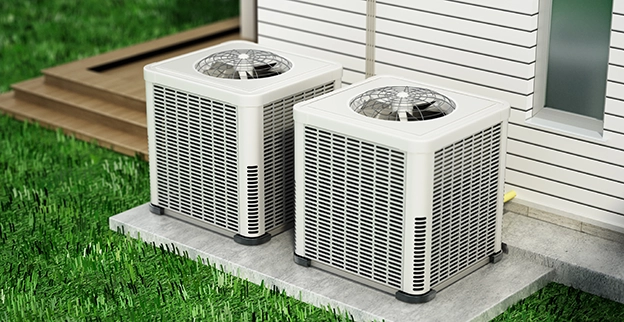
Two heat pump exterior outdoor units.

Schedule Online

By checking this box, I agree to opt in to receive automated SMS and/or MMS messages from Aire Serv, a Neighborly company, and its franchisees to the provided mobile number(s). Messages & data rates may apply. Message frequency varies. View Terms and Privacy Policy. Reply STOP to opt out of future messages. Reply HELP for help.

By entering your email address, you agree to receive emails about services, updates or promotions, and you agree to the Terms and Privacy Policy. You may unsubscribe at any time.

  • Worth knowing before you buy rather than after, because it generates service calls that are not service calls.

    A gas furnace delivers air well over 100 degrees. A heat pump typically delivers air in the mid to high 90s. That is warmer than your room and it will heat the house, but it can feel cool against your hand, and homeowners moving from a furnace regularly report it as a defect.It is not one. The tradeoff is that a heat pump produces that heat far more efficiently, because it moves existing heat rather than generating it. In a climate as mild as ours, that is exactly the condition where moving heat outperforms making it.

    Two related behaviors are also normal and also generate calls. Heat pumps run longer cycles than furnaces, so a system that seems to run constantly on a cool morning is usually operating correctly. And in heating mode the outdoor unit periodically reverses briefly to melt frost off the coil, during which you may see steam outside and feel cooler air indoors for several minutes.

    We walk through all of this at commissioning rather than leaving you to discover it in December. Setting the expectation before the sale costs us nothing and saves you a service call and a bad first winter with new equipment.

    A heat pump heats steadily rather than aggressively, which is more efficient and less dramatic. Homeowners who understand that before the first cold week are satisfied with the equipment. Homeowners who do not tend to call in December convinced something is broken.

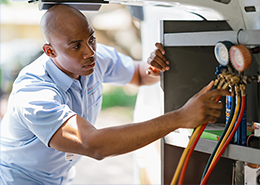
Aire Serv technician working on the heat pump unit.

Staging Matters More Than the Efficiency Rating

If you have to choose between a higher efficiency number and variable capacity at a similar price, take the capacity in this climate.

Single-stage equipment runs at full output or not at all. It cools quickly and cycles off, which is the behavior that produces poor dehumidification and the cool-but-clammy complaint we hear constantly. Two-stage equipment operates at reduced output most of the time and steps up on demand, running longer and removing considerably more moisture. Variable-capacity equipment modulates continuously, producing very long runs at low output, which is the best moisture removal available in residential equipment.

Efficiency ratings do matter here, more than in most of the country, because our cooling season is long enough to accumulate the run hours that make efficiency pay back. But humidity rather than temperature is what actually determines whether a house feels good on the Gulf Coast, and staging is what controls humidity.

Between two systems at similar cost, the one that runs longer at lower output will make your house feel better. That is the difference you notice every day, and it is the reason people replace equipment early even when it still works.

The industry trained homeowners to compare tonnage, SEER2, and price, because those three numbers fit on a quote sheet. None of them predicts whether your house will feel good in August. Ask instead what the equipment can turn down to, and how long it runs at low output on an average day. That answer tells you more about your comfort than the efficiency rating will.

On the Coast, the Coil Rating and the Hardware Are the Decision

A heat pump's outdoor unit operates in both seasons, which means it faces salt exposure year-round rather than seasonally. That changes what you should be buying.

Coastal design practice generally holds that condenser coils within a few miles of open salt water should carry an ASTM B117 salt spray rating, and that properties within about a mile should have both the outdoor and indoor coils rated. Several manufacturers offer coastal-rated equipment lines or factory-applied coil coating at additional cost, and some offer extended corrosion coverage

That last point matters more than most homeowners realize. The large majority of manufacturer warranties exclude coastal corrosion entirely, so a corroded coil in Gulf Breeze is generally not a warranty claim. The time to discuss coastal-rated equipment is during selection, not after a denial.

We also use corrosion-resistant mounting hardware and stainless fasteners rather than what ships in the box, because on a coastal property the hardware frequently fails before the equipment it holds. And we address flood-zone elevation as part of the design rather than reinstalling at the existing height, since much of the coastal territory sits in AE or VE zones, and a submerged condenser is generally not salvageable even if it runs afterward.

Is a Heat Pump Right for Your House?

Usually yes when:

  • You are replacing your air conditioner anyway, which makes the heating capability nearly incidental in cost
  • Your home is all-electric with no gas service
  • Your existing heating is electric resistance, which a heat pump will beat substantially on operating cost because it moves heat rather than generating it
  • You want one system to maintain rather than two

Consider keeping a separate furnace when:

  • You have gas service and a healthy furnace that is not near replacement, in which case you may only need to replace the cooling half
  • You strongly prefer the higher supply air temperature a furnace delivers, which is a real and legitimate preference
  • Your electrical service cannot support the backup heat a heat pump requires without an upgrade you would rather not do

The honest comparison on operating cost. A heat pump moves existing heat rather than creating it, which is why it outperforms electric resistance heat by a wide margin. Against natural gas the comparison is closer and depends on local rates, and in a climate with a heating season this short the absolute difference is small either way. The stronger argument for a heat pump here is not winter savings. It is that you get heating capability included in a cooling system replacement you were making anyway.

Is a Heat Pump Right for Your House?
Heat pump outdoor unit.

Supply Air Temperature, and Setting Expectations 

Worth knowing before you buy rather than after, because it generates service calls that are not service calls.

A gas furnace delivers air well over 100 degrees. A heat pump typically delivers air in the mid to high 90s. That is warmer than your room and it will warm the house, but it can feel cool against your hand, and homeowners moving from a furnace to a heat pump frequently report it as a problem.It is not a defect. It is how the equipment works, and the tradeoff is that it produces that heat far more efficiently.

Two related behaviors that are also normal: heat pumps run longer cycles than furnaces, and in heating mode the outdoor unit will periodically reverse briefly to melt frost, during which you may see steam outside and feel cooler air indoors for several minutes.

We walk through all of this at commissioning so nobody is surprised in December.

Staging, and Why It Matters More Than the Rating

If you are choosing between a higher efficiency rating and variable capacity at a similar price, take the capacity in this climate.

Single-stage runs at full output or not at all. It cools quickly and cycles off, which is the behavior that produces poor dehumidification and the cool-but-clammy complaint.

Two-stage operates at reduced output most of the time and steps up on demand. Longer run cycles remove considerably more moisture.

Variable capacity modulates continuously, which means very long runs at low output. That is the best dehumidification behavior available in residential equipment, and in a market where humidity is the actual comfort problem, it is the most noticeable difference you can buy.

Efficiency ratings still matter here, more than in most of the country, because our long cooling season accumulates the run hours that make efficiency pay back. But between two systems at similar cost, the one that runs longer at lower output will make your house feel better. See whole-home dehumidification for the cases where even variable capacity is not enough.

Coastal Heat Pump Installation

On Pensacola Beach, Perdido Key, the Gulf Breeze peninsula, Navarre Beach, and the Pensacola bayfront, the equipment decision changes.

A heat pump's outdoor unit operates year round, both seasons, which means it faces salt exposure continuously rather than seasonally. Salt corrodes the aluminum fins and copper tubing of the coil, reducing the surface available to move heat, which raises operating pressures and loads the compressor. It also corrodes electrical terminals, which is what produces the repeated capacitor and contactor failures coastal homeowners come to accept as routine.

What we do differently on a coastal installation:

  • Specify corrosion protection appropriate to the exposure, and discuss coastal-rated equipment lines where available. Coastal design practice generally holds that condenser coils within a few miles of open salt water should carry an ASTM B117 salt spray rating.
  • Use corrosion-resistant mounting hardware and stainless fasteners rather than the standard hardware that ships with equipment, because on a coastal property the hardware frequently fails before the equipment does
  • Address flood zone elevation as part of the design rather than reinstalling at existing height, since much of the coastal territory is in AE or VE zones and a submerged condenser is generally not salvageable
  • Verify anchoring to wind zone requirements

Also worth raising before you buy: Most manufacturer warranties exclude coastal corrosion. Some manufacturers offer coastal-rated lines or extended corrosion coverage at additional cost, and the moment to have that conversation is during equipment selection rather than after a claim is denied. See the Coastal Advantage Plan for ongoing protection.

Dual Fuel, and Whether It Is Worth It Here

A dual fuel system pairs a heat pump with a gas furnace. The heat pump handles most of the season, and below a set outdoor temperature, the furnace takes over.

In cold climates, this is a genuinely valuable arrangement. Here, it usually is not, and we would rather say so than sell the more complex system.

Our cold hours are so few that the furnace portion runs rarely, which means the added equipment cost and control complexity buy very little. The exception worth considering is a home with a relatively new, healthy gas furnace where you are replacing the cooling side anyway. In that case, adding a heat pump gives you efficient heating for most of the season without discarding equipment that still has life in it.

If someone is quoting you dual-fuel for a Gulf Coast home, ask what they expect the crossover temperature to be and how many hours a year the furnace will actually run. The answer usually makes the decision for you.

Replacing an Older Heat Pump

Signals that replacement rather than repair is the right call:

  • The system is 15 years or older, and especially twenty-plus
  • The failure is a compressor, a reversing valve, or an evaporator coil
  • The system uses R-22, which is no longer produced, making every future refrigerant repair worse than the last
  • The outdoor coil is corroded enough that capacity is already reduced, which is common on coastal properties
  • It has never controlled humidity well, which typically means it was oversized at installation and no repair changes that
  • Multiple service calls in the last two seasons

On refrigerant: new equipment uses R-454B or R-32. Systems built through roughly 2024 generally use R-410A, which is in phase-down, so cost and availability move in one direction over that equipment's remaining life. R-22 predates all of it.

Replacement is also an opportunity to correct decisions made at the original installation, which is frequently where the real value is. Correct sizing, staged capacity, proper backup heat sizing, elevation on a flood-prone property, and corrosion protection on the coast are all easier and cheaper to do now than to retrofit later.

Related Services

Written by the team at Aire Serv of Northwest Florida.

Technically reviewed by Justin B., NATE-certified and EPA 608 certified, 19 years in the trade. Reviewed for accuracy by owner Justin Sonntag, a 26-year Gulf Coast resident.Florida Certified Air Conditioning Contractor, license CAC1823566.

Questions about your system? Call or book online in about a minute.
The Aire Serv Advantage

From tune-ups and maintenance to heater repair and air conditioning replacement, we provide services that keep the air you breathe clean and keep your home or business at the perfect temperature.

Worry-Free HVAC Starts with Our Advantage Plan

Keep your system running smoothly with expert care you can count on.

Heat Pump Installation Questions

  • For most homes, yes. Heat pumps move heat rather than generating it, which is most efficient in mild conditions, and mild describes our entire winter. The stronger argument is economic rather than technical: if you are replacing your air conditioner anyway, the incremental cost to gain heating capability is small compared to buying two separate systems. A heat pump also beats electric resistance heat substantially on operating cost. Where a heat pump is less compelling is a home with gas service and a healthy furnace that is not near replacement, in which case you may only need to replace the cooling half.

Worry-Free HVAC Starts with Our Advantage Plan

Keep your system running smoothly with expert care you can count on.

Schedule Online

By checking this box, I agree to opt in to receive automated SMS and/or MMS messages from Aire Serv, a Neighborly company, and its franchisees to the provided mobile number(s). Messages & data rates may apply. Message frequency varies. View Terms and Privacy Policy. Reply STOP to opt out of future messages. Reply HELP for help.

By entering your email address, you agree to receive emails about services, updates or promotions, and you agree to the Terms and Privacy Policy. You may unsubscribe at any time.