Skip to Main Content Skip to Footer Content

AC and HVAC System Installation in Northwest Florida

The most important factor in your comfort isn't the system's size, SEER2 rating, or price. It's whether your AC is properly sized for your home and whether your ductwork can support it.

In our climate, proper sizing is especially important due to the humidity. An oversized system cools the home fast, shuts off before removing enough moisture, and leaves you feeling cold but damp. Installing a bigger AC system isn't better, and often makes the problem worse.

Call or schedule online.

AC and HVAC System Installation in Northwest Florida
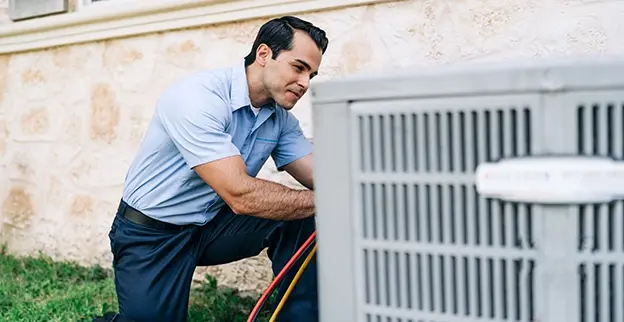
Aire Serv technician working on a customer's air conditioning unit.

Schedule Online

By checking this box, I agree to opt in to receive automated SMS and/or MMS messages from Aire Serv, a Neighborly company, and its franchisees to the provided mobile number(s). Messages & data rates may apply. Message frequency varies. View Terms and Privacy Policy. Reply STOP to opt out of future messages. Reply HELP for help.

By entering your email address, you agree to receive emails about services, updates or promotions, and you agree to the Terms and Privacy Policy. You may unsubscribe at any time.

  • Your air conditioner has two jobs running at the same time. It lowers temperature, which is the sensible load, and it removes moisture, which is the latent load. Temperature responds fast. Moisture removal requires runtime because air has to keep passing across a cold coil long enough for water to condense and drain away.

    An oversized system satisfies the thermostat in a short burst and shuts down before the coil has stripped much moisture from the air. You end up cool and damp, which feels worse than slightly warmer and dry. It also short-cycles, and every start is when a compressor experiences the most stress, so the equipment wears out faster and uses more energy than its efficiency rating suggests.

    Oversizing happens because it is the safer error from an installer's point of view. Sizing by square footage is faster than running a calculation, and rounding up guarantees nobody complains during a walkthrough in April. The consequences surface in July three summers later, at which point the homeowner blames the equipment.

    A Manual J load calculation accounts for square footage, insulation, window area and orientation, ceiling height, infiltration, duct location, and occupancy. Two identically sized houses, one in a 2018 Pace subdivision and one in East Hill, produce very different answers. We run the calculation on your actual house rather than matching whatever tonnage is there now, because what is there now was frequently wrong.

    If a contractor quotes tonnage without measuring your home, that is the entire review of their process.

  • If you are choosing between spending more on a higher efficiency number and spending more on variable capacity, take the capacity.

    Single-stage equipment runs at full output or not at all. It cools quickly and cycles off, which is exactly the behavior that produces poor dehumidification. Two-stage equipment operates at reduced output most of the time and steps up only on the hottest days, which means longer and gentler run cycles that remove considerably more moisture. Variable-capacity equipment modulates continuously across a wide range, producing very long runs at low output, and that is the best moisture removal available in residential equipment.

    Efficiency ratings still matter, and they matter more here than in most of the country, because our long cooling season accumulates the run hours that make efficiency pay back. But between two systems at a similar price, the one that can run longer at lower output will make your house feel better, and comfort complaints are what actually drive people to replace equipment early.

    The industry trained homeowners to compare tonnage, SEER2, and price, because those are the three things easiest to put on a quote and the three least predictive of whether you will be comfortable. We will show you the options honestly, including the ones we would not spend money on, and we will tell you when the cheaper configuration is the better buy for your house.

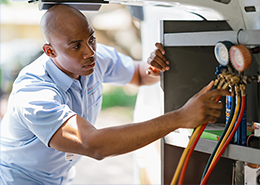
Aire Serv technician working on a customer's air conditioning unit.

The Duct System Decides How the New Equipment Performs

A new system attached to a marginal duct system performs like a marginal duct system. This is the most commonly skipped item on an installation quote and the most common reason homeowners are disappointed with expensive new equipment.

In most Pensacola homes, the ducts run through an attic. Every gap in that system loses conditioned air you paid for, and because the system must make up that volume from somewhere, it draws replacement air out of the attic and delivers it into your living space. That is hot, humid, dusty air arriving through a system you just replaced.

Our assessment includes static pressure measurement, which tells us whether the ducts are choking the equipment; connection integrity at the plenum and takeoffs; return sizing; insulation condition; and evidence of leakage. Undersized returns are a frequent shortcut in production construction and a common cause of a system that cannot keep up despite adequate capacity.

If correction is needed, we quote it separately so you can see exactly what it costs and decide on it independently rather than finding it buried in a package price. Doing that work during the installation, while the equipment is already out and the crew is on site, costs substantially less than treating it as a separate project six months later.

Sizing, and Why Bigger Is Worse Here

Your air conditioner has two jobs. Lower the temperature, which is the sensible load, and remove moisture, which is the latent load. Temperature responds fast. Moisture removal requires the system to run long enough for water to condense on the coil and drain away.

An oversized system satisfies the thermostat in a short burst and shuts down. The coil never stays cold long enough to strip much moisture out of the air. You end up cool and humid, which feels worse than slightly warmer and dry.

The secondary costs are real. Every start is when a compressor experiences the most stress, so short cycling shortens equipment life and pushes energy use above what the efficiency rating implies.

Why oversizing happens: It is the safer error from an installer's perspective. Sizing by square footage is faster than a load calculation, and rounding up guarantees nobody complains during a walkthrough that the house will not cool. The consequences surface years later as a humidity problem the homeowner attributes to the equipment rather than the sizing.

A Manual J load calculation accounts for square footage, insulation levels, window area and orientation, ceiling height, air infiltration, duct location, and occupancy. Two houses of identical size in Pace and East Hill produce very different answers. We run the calculation on your actual house rather than matching whatever tonnage was there before, because what was there before was frequently wrong.

If a contractor quotes you tonnage without measuring your house, that is the whole review of their process.

Sizing, and Why Bigger Is Worse Here
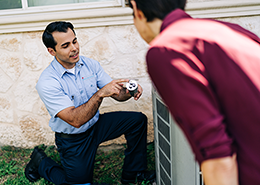
Aire Serv technician talking with a client in front of an air conditioning unit.

Staging, and Where Your Upgrade Money Actually Goes

If you are choosing between spending more on a higher efficiency rating or spending more on variable capacity, in this climate the answer is usually capacity.

Single-stage equipment runs at full output or not at all. It cools fast and cycles off, which is the behavior that produces poor dehumidification.

Two-stage runs at reduced output most of the time, stepping up only on the hottest days. Longer, gentler run cycles remove substantially more moisture.

Variable capacity modulates continuously across a wide range, which means very long run times at low output. That is the best dehumidification behavior available and it is the most noticeable comfort difference you can buy in this market.

Efficiency ratings still matter, and our long cooling season means efficiency spending pays back better here than in most of the country. But between two systems at similar price, the one that can run longer at lower output will make your house feel better, and comfort complaints are what actually drive people to replace equipment early.

We will show you the options honestly, including the ones we would not spend money on.

The Duct System Decides How the New Equipment Performs

A new system attached to a marginal duct system performs like a marginal duct system. This is the most commonly skipped part of an installation quote and the most common reason homeowners are disappointed with expensive new equipment.

Our assessment includes:

  • Static pressure measurement, which tells us whether the ducts are choking the equipment
  • Connection integrity at plenum, boots, and takeoffs
  • Return sizing, since undersized returns are a frequent shortcut in production construction
  • Insulation condition, which degrades in hot humid attics
  • Evidence of leakage, which in an attic means you are importing hot humid air continuously
  • Run lengths and support

If correction is needed, we quote it separately so you can see exactly what it costs and decide independently. Doing it during installation, while equipment is already out and installers are already on site, costs substantially less than treating it as a separate project later.

See duct sealing and duct repair and replacement for more information!

Humidity-First Design

We design around moisture, because in Northwest Florida that is what determines whether the system feels good.

That means correct sizing rather than generous sizing, staged or variable capacity where the budget allows, a properly sized and configured air handler, thermostat controls that can respond to humidity rather than temperature alone, and an honest conversation about whether the house also needs dedicated dehumidification.

A point worth understanding: even a perfectly sized system cannot dehumidify when it is not running. On mild days, in shoulder season, and in lightly occupied homes, cooling demand drops while the moisture load does not. That gap is structural rather than an equipment defect. For tightly built newer homes in Beulah, Pace, and Navarre, and for seasonal properties on the coast, a dehumidifier installed alongside the system is frequently the difference between a house that is adequate and one that is genuinely comfortable.

We raise that during the assessment rather than after you have already bought.

What an Installation Includes

  • Free in-home assessment with a Manual J load calculation
  • Equipment options explained, including trade-offs and what we would not recommend
  • Old system removed with refrigerant properly recovered
  • New outdoor unit set on a level pad, with anchoring appropriate to wind zone requirements
  • Indoor air handler or coil, with correctly sized drain pan
  • New refrigerant lines where required, with line length accounted for in the charge
  • Condensate drainage with a functioning float safety switch
  • Thermostat configured for this climate
  • Duct correction where quoted and approved
  • Permitting and inspection
  • Startup and commissioning, with charge verified by superheat and subcooling rather than gauge pressure alone
  • Warranty registration completed inside the manufacturer's window, with confirmation to you
  • Walkthrough covering operation, filter intervals, and what normal performance feels like

A note on warranties: Major manufacturers publish two-part warranties on the same equipment, a base term and a longer registered term, with registration required within a window after installation that is commonly sixty days. Trane, for example, publishes a five-year base against ten years registered. Miss the window and the equipment drops to base automatically. We register what we install and give you confirmation. If you are having work done by anyone else, ask for that confirmation in writing rather than assuming it happened.

Coastal properties additionally receive corrosion protection appropriate to the exposure, corrosion-resistant mounting hardware rather than the standard hardware that ships with equipment, and flood zone elevation addressed as part of the design. See our Coastal Advantage Plan for more information.

Most straightforward replacements complete in a day. Duct correction, electrical work, or difficult access extends that, and we tell you before we start rather than during.

Refrigerant, Plainly

New equipment installed today uses R-454B or R-32. Systems built through roughly 2024 generally use R-410A, which is in phase-down, meaning cost and availability move in one direction over the remaining life of that equipment. Systems using R-22 predate all of it, and R-22 is no longer produced.

What this means practically: if you are replacing your system, you are moving to current refrigerant and that is a genuine benefit rather than a sales point. If you are deciding whether to repair an R-22 system, the refrigerant situation alone is usually the deciding factor.

We will identify what your existing system uses during the assessment and factor it into the comparison rather than leaving it out.

Timing

The best window to replace a system you know is failing is not July.

In peak season, everyone in Escambia and Santa Rosa counties needs the same thing at once. Scheduling is tight, equipment availability tightens, and the decision gets made under pressure in a hot house rather than deliberately with time to compare options.

If your system barely made it through last summer, or if you have been quoted a compressor on aging equipment, deciding in the shoulder season is consistently the cheaper version of that decision. Deferring a known-failing system into peak demand is the most expensive version.

Financing

Payment plan options are available through our financing partner, with online application and a quick decision. Approval, rates, and terms are determined by the lender based on your credit profile, and financing is subject to credit approval. Not all applicants qualify. See our financing page for details.

We discuss options before you commit, not after.

Related Services

Written by the team at Aire Serv of Northwest Florida

Technically reviewed by Justin B., NATE-certified and EPA 608 certified, 19 years in the trade.

Reviewed for accuracy by owner Justin Sonntag, a 26-year Gulf Coast resident.

Florida Certified Air Conditioning Contractor, license CAC1823566.

The Aire Serv Advantage

From tune-ups and maintenance to heater repair and air conditioning replacement, we provide services that keep the air you breathe clean and keep your home or business at the perfect temperature.

Worry-Free HVAC Starts with Our Advantage Plan

Keep your system running smoothly with expert care you can count on.

AC Installation Questions

  • It depends on the capacity your home actually requires, the equipment and staging you select, the condition of the duct system, whether electrical work is needed, and access difficulty. Attic and elevated coastal installations take longer than a ground-level closet. We provide free in-home assessments and a quote after seeing the house, because a phone quote on a purchase this size is a guess. Duct correction is quoted separately so you can evaluate it independently. Payment plan options are available, subject to credit approval.

Worry-Free HVAC Starts with Our Advantage Plan

Keep your system running smoothly with expert care you can count on.

Schedule Online

By checking this box, I agree to opt in to receive automated SMS and/or MMS messages from Aire Serv, a Neighborly company, and its franchisees to the provided mobile number(s). Messages & data rates may apply. Message frequency varies. View Terms and Privacy Policy. Reply STOP to opt out of future messages. Reply HELP for help.

By entering your email address, you agree to receive emails about services, updates or promotions, and you agree to the Terms and Privacy Policy. You may unsubscribe at any time.