Backup Heat Sizing, the Decision Everyone Gets Wrong ;
If you install a heat pump here, the auxiliary heat specification matters more than the SEER2 number on the box, and it gets less attention than any other part of the job.
Heat pumps lose capacity as outdoor temperature falls. On a normal Northwest Florida winter night this is irrelevant, because the load is small. During an actual freeze event it becomes the whole story.
Undersized backup leaves the house unable to hold temperature during the few nights a year you actually need it. That is the failure the January 2025 cold snap exposed across this region, when homes with technically functioning systems could not keep up.
Oversized backup costs you in two ways. It requires more electrical service capacity, sometimes forcing a panel upgrade that would otherwise be unnecessary, and if the lockout is configured poorly it runs expensive resistance heat during mild weather.
Correct specification means sizing the strips to the actual heating load at design conditions, verifying the electrical service can carry it, and configuring the auxiliary lockout for this climate rather than accepting a factory default written for somewhere colder. Set too low and backup never engages during a cold snap. Set too high and it runs when the heat pump could handle the load alone.
We size backup heat deliberately and we set the lockout as part of commissioning rather than leaving it at whatever the thermostat shipped with. Ask any contractor quoting you a heat pump what auxiliary lockout temperature they will set and why. The answer tells you a lot.
Load Calculation, Not Tonnage Matching
We size to the house, not to what was there before.
That matters more than it sounds, because the previous system was frequently wrong. Oversizing is the most common error in this region, and on the heating side it produces short cycling, uneven temperatures, and equipment that wears faster. On the cooling side, if you are installing a heat pump handling both seasons, oversizing produces the specific complaint we hear constantly: a house that is cold and still feels damp, because an oversized system satisfies the thermostat before it has run long enough to remove moisture.
A proper load calculation accounts for square footage, insulation levels, window area and orientation, ceiling height, air infiltration, and duct location. In a hundred-year-old Pensacola home and a two-year-old Pace subdivision home of identical size, the answers are not close.
For gas and propane furnaces the same principle applies. Our heating load is genuinely small, and furnaces installed here are frequently oversized because equipment was matched to the cooling requirement or simply replaced in kind without anyone recalculating.
What a Heating Installation Includes
- Load calculation for the actual house
- Equipment selection with the options and trade-offs explained, including what we would not spend money on
- Correctly sized auxiliary heat and a verified electrical service, on heat pump installations
- Combustion venting evaluated and brought to current requirements, on furnace installations
- Gas piping and manifold pressure verified against the equipment rating plate, on furnace installations
- Condensate drainage with a functioning float safety switch
- Thermostat configured for this climate, including auxiliary lockout on heat pumps
- Duct system evaluated, with any correction quoted before installation rather than discovered afterward
- Permitting and inspection where required
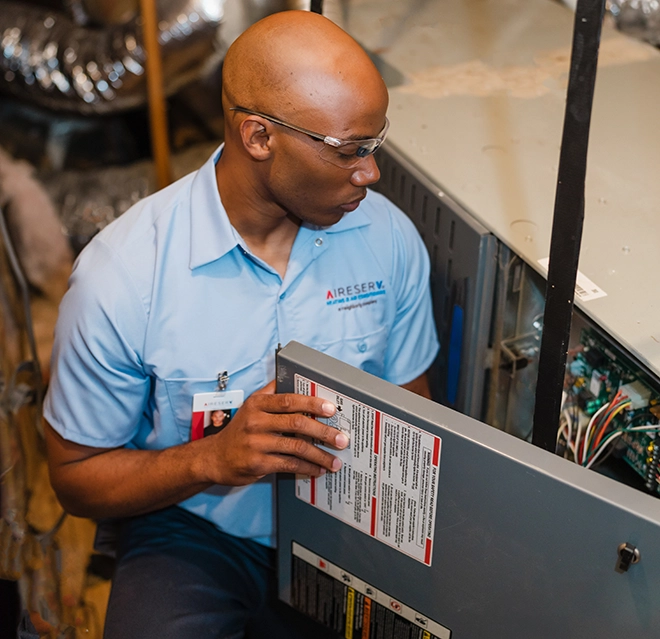
- Startup, commissioning, and verification of every stage of heat
- Equipment registration for warranty, and documentation you can retrieve when you need it
- Walkthrough of how the system works, including what normal operation feels like
On coastal properties, we specify corrosion protection appropriate to the exposure and use corrosion-resistant mounting hardware. See the Coastal Advantage Plan for more information.
Duct Correction, and Why Now Is Cheaper
If your duct system is marginal, the moment to address it is during equipment replacement, not afterward.
A new system attached to a leaking duct system performs like the duct system. Leakage into an attic loses conditioned air you paid for and pulls hot or cold unconditioned air back in. Undersized returns starve the equipment. Long, poorly supported runs lose capacity before air reaches the far rooms.
Doing that work while the equipment is already out and the installers are already there costs substantially less than treating it as a separate project six months later. We evaluate static pressure and duct condition as part of the assessment and quote correction separately, so you can see exactly what it costs and decide with real numbers.
Financing
Heating replacement is rarely planned. Payment plan options are available through our financing partner, with online application and a quick decision. Approval, rates, and terms are determined by the lender based on your credit profile, and financing is subject to credit approval. Not all applicants qualify. See our financing page for details.
We will discuss options before you commit, not after.
Timing, and Why Fall Beats January
Heating equipment installed during a cold snap costs more in every way that is not the invoice.
In January, everyone in both counties needs the same thing at the same time. Scheduling is tight, equipment availability tightens, and the decision gets made under pressure with a cold house rather than deliberately with time to compare options.
The better window is September through November. The equipment is available, the schedule is open, you can take time for comparison, and the system is commissioned and verified before you need it.
If you already know your heating system is failing, or if it barely made it through last winter, that decision is best made now rather than deferred into the season. Deferring a known-failing system into peak demand is consistently the most expensive option.
Related Services
Written by the team at Aire Serv of Northwest Florida.
Technically reviewed by Justin B., NATE-certified and EPA 608 certified, 19 years in the trade.
Reviewed for accuracy by owner Justin Sonntag, a 26-year Gulf Coast resident.
Florida Certified Air Conditioning Contractor, license CAC1823566.
Last reviewed: August 2026
Questions about your system? Call or book online in about a minute.