Skip to Main Content Skip to Footer Content

Fresh Air Ventilation for Tight Northwest Florida Homes

Modern Gulf Coast homes are built tight, which saves energy but also traps moisture and contaminants indoors. Controlled fresh air helps - but bringing in outdoor air also brings in humidity. Without accounting for that latent load, ventilation can make indoor humidity worse. We treat ventilation and dehumidification as one design problem: fresh air only works when moisture is managed, too.

Aire Serv of Northwest Florida, locally owned, licensed CAC1823566.

Call or schedule online.

Fresh Air Ventilation for Tight Northwest Florida Homes
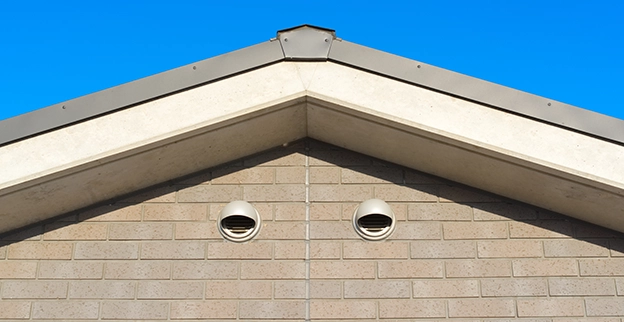
Roof ventilations.

Schedule Online

By checking this box, I agree to opt in to receive automated SMS and/or MMS messages from Aire Serv, a Neighborly company, and its franchisees to the provided mobile number(s). Messages & data rates may apply. Message frequency varies. View Terms and Privacy Policy. Reply STOP to opt out of future messages. Reply HELP for help.

By entering your email address, you agree to receive emails about services, updates or promotions, and you agree to the Terms and Privacy Policy. You may unsubscribe at any time.

  • Not every house does, and we would rather tell you that honestly than sell equipment.

    Likely yes if your home was built after roughly 2010, particularly with spray foam insulation or impact-rated windows. Also if it has been substantially air-sealed or had insulation upgraded, if occupancy is high relative to size, or if you have a home office with people in it all day. New construction in Beulah, Pace, and Navarre falls squarely in this group.

    Probably not if your home is pre-2000 construction with the leakage that comes with it. A house that already exchanges air whether you want it to or not is already ventilating, inefficiently but continuously.

    The honest test is what your actual complaint is.

    If the house feels stuffy and humid, that is a humidity problem, and dehumidification is the answer, not ventilation. Adding outdoor air to a humid house makes it worse.

    If the air feels stale and stagnant while humidity is already under control, ventilation is the right conversation.

    Tight homes genuinely benefit from controlled fresh air, because moisture and contaminants generated inside from cooking, showering, and simply breathing have far fewer paths out. That is a real problem, and it deserves a real solution. It just is not the same problem as humidity.

  • Both exchange stale indoor air for fresh outdoor air while recovering energy from the air being exhausted. The difference is what gets transferred, and it decides whether the equipment helps or hurts on the Gulf Coast.

    A heat recovery ventilator, or HRV, transfers heat only. It is designed for cold, dry climates. Installed here, it hands you the full outdoor humidity load with only the temperature moderated, which is the opposite of helpful.

    An energy recovery ventilator, or ERV, transfers both heat and a portion of the moisture between the incoming and outgoing streams. That helps considerably, and it is the correct choice for this region.

    HRVs get installed here anyway, in good faith, by contractors applying advice written for somewhere else. It is one of the more common ventilation mistakes we find.

    The third and worst option is a simple fresh air intake ducted to the return. It is the cheapest approach, and it pulls outdoor air straight into the system with no moisture treatment at all.

    Even a correctly chosen ERV moderates the moisture load rather than eliminating it. During humid stretches, the incoming air is still adding water to your house. Better than the alternatives, and still incomplete on its own.

    There is a straightforward test when you are being quoted. Ask which product is being proposed and whether it transfers moisture. If the answer is heat only, it is the wrong equipment for this climate regardless of how well it is made. If the answer is heat and moisture, ask what happens to the moisture that still gets through, because that is the part that determines whether the system helps.

  • This is the part that makes ventilation work in this climate rather than backfire.

    The ERV exchanges stale indoor air for outdoor air and transfers heat and some moisture between the streams, so you are not importing the full outdoor load. The dehumidifier handles what gets through, as well as the moisture your household generates internally.

    Together they do the job neither does alone: genuinely fresh air at a controlled humidity level.

    Sizing conservatively matters more than it does elsewhere. Ventilation rates are commonly set by reference to ASHRAE 62.2, which specifies a minimum based on home size and occupancy. On the Gulf Coast, exceeding that minimum is not a bonus. Every additional cubic foot per minute is additional moisture your dehumidifier has to remove and additional energy you pay for. A contractor proposing an oversized ventilation rate here is adding load without a corresponding benefit.

    Controls should coordinate. Ventilation, dehumidification, and cooling interact, and systems in which each device operates on its own independent logic produce inconsistent results and waste energy.

    In some configurations, the incoming outdoor air can be routed through the dehumidifier before it enters the house, so it arrives already dried. That is often the cleanest arrangement here, and it is a design decision made during installation rather than casually retrofitted.

Aire Serv technician greets a customer at their door.

Does Your House Actually Need Ventilation

Not every house does, and we would rather tell you that.

Likely yes:

  • Built after roughly 2010, particularly with spray foam insulation or impact windows
  • New construction in Beulah, Pace, Navarre, or any recent subdivision
  • A home that has been substantially air-sealed or had insulation upgraded
  • High occupancy relative to size, or a home office with people in it all day
  • Persistent stale air, odors that linger, or noticeable stuffiness that is not a humidity problem

Probably not:

  • Pre-2000 construction with the leakage that comes with it
  • A house that already exchanges air whether you want it to or not
  • Any house where the actual complaint is humidity, odor, or dust, since those have different solutions

The honest test: if your complaint is that the house feels stuffy and humid, the answer is almost certainly dehumidification, not ventilation. If your complaint is that the air feels stale and stagnant even when humidity is under control, ventilation is the right conversation.

Does Your House Actually Need Ventilation
Aire Serv technician shaking hands with a client.

Why Ventilation Is Different Here

In a cold, dry climate, ventilation is straightforward. Bring in outdoor air, recover some heat, done. The moisture you import is negligible.

On the Gulf Coast, outdoor air carries a substantial moisture load nearly year-round. Every cubic foot you bring in contains water that your system then has to remove. Ventilate without planning for that, and you have installed a device that continuously imports the exact thing you are trying to control.

This is the single most common ventilation mistake in this region, and it is usually made in good faith by contractors applying advice written for somewhere else.

Three ways it goes wrong:

A simple fresh air intake ducted to the return is the cheapest approach and the worst one here. It pulls outdoor air straight into the system with no moisture treatment at all.

An HRV, or heat recovery ventilator, transfers heat between incoming and outgoing air streams but not moisture. It is designed for cold climates. Installed here, it hands you the humidity with only the temperature moderated.

An ERV with no dehumidification backup. An energy recovery ventilator does transfer some moisture between streams, which helps considerably. But it moderates the moisture load, it does not eliminate it, and during humid stretches the incoming air is still adding water to your house. An ERV alone is better than the other two options and still incomplete.

What We Actually Recommend

An ERV, sized conservatively, paired with dehumidification.

The ERV exchanges stale indoor air for outdoor air and transfers both heat and a portion of the moisture between the two streams, so you are not importing the full outdoor load. The dehumidifier handles what gets through, along with the moisture your household generates internally.

Together they do the job neither does alone: genuinely fresh air at a controlled humidity level.

Sizing conservatively matters. Ventilation rates are commonly set by reference to ASHRAE 62.2, which specifies minimum residential ventilation. On the Gulf Coast, exceeding that minimum is not a bonus, because every additional cubic foot per minute is additional moisture your dehumidifier has to remove and additional energy you pay for. We size to what the house needs, not to a larger number that sounds more thorough.

Controls should coordinate. Ventilation, dehumidification, and cooling all interact. Systems where each device operates independently on its own logic produce inconsistent results and waste energy. Integrating them so the ventilation runs when conditions favor it, and the dehumidifier handles what remains, is what separates a working installation from a collection of equipment.

A dedicated dehumidifier can also condition ventilation air directly. In some configurations, incoming outdoor air is routed through the dehumidifier before entering the house, so it arrives already dried. This is often the cleanest arrangement in this climate.

Ventilation and Combustion Safety

One item that is not optional.

In a tight house with a fuel-burning appliance, a gas or propane furnace, water heater, or fireplace, exhaust fans and ventilation equipment can create negative pressure. In severe cases, this can interfere with proper venting of combustion gases.

When we evaluate ventilation on a home with combustion appliances, we account for the pressure balance rather than treating the ventilation system in isolation. If your home has any fuel-burning appliance, you should also have working carbon monoxide detectors regardless of what ventilation equipment is installed. See furnace repair.

Related Services

  • Whole-home dehumidification, which is the required partner for ventilation in this climate and the more common answer on its own
  • Indoor air quality, for the full picture and the order in which to address it
  • Air filters, because ventilation air should be filtered before it enters the house
  • Duct sealing, which is worth doing before adding intentional ventilation, since a leaky house is already ventilating in the least useful way possible

Written by the team at Aire Serv of Northwest Florida.
Technically reviewed by Justin B., NATE-certified and EPA 608 certified, 19 years in the trade.
Reviewed for accuracy by owner Justin Sonntag, a 26-year Gulf Coast resident.
Florida Certified Air Conditioning Contractor, license CAC1823566.

Last reviewed: August 2026

Questions about your system? Call or book online in about a minute.Written by the team at Aire Serv of Northwest Florida.
The Aire Serv Advantage

From tune-ups and maintenance to heater repair and air conditioning replacement, we provide services that keep the air you breathe clean and keep your home or business at the perfect temperature.

Worry-Free HVAC Starts with Our Advantage Plan

Keep your system running smoothly with expert care you can count on.

Fresh Air Ventilation Questions

  • It will if it is installed without accounting for moisture, and that is the most common mistake made with this equipment on the Gulf Coast. Outdoor air here carries a substantial moisture load nearly year-round, so anything that brings it inside is importing water. A simple fresh air intake does this with no treatment at all. An HRV transfers heat but not moisture, which makes it the wrong product for this climate. An ERV transfers some moisture between the incoming and outgoing streams, which helps meaningfully, but it moderates the load rather than eliminating it. The correct approach here is an ERV paired with dehumidification, so the moisture that gets through is handled.
Worry-Free HVAC Starts with Our Advantage Plan

Keep your system running smoothly with expert care you can count on.

Schedule Online

By checking this box, I agree to opt in to receive automated SMS and/or MMS messages from Aire Serv, a Neighborly company, and its franchisees to the provided mobile number(s). Messages & data rates may apply. Message frequency varies. View Terms and Privacy Policy. Reply STOP to opt out of future messages. Reply HELP for help.

By entering your email address, you agree to receive emails about services, updates or promotions, and you agree to the Terms and Privacy Policy. You may unsubscribe at any time.